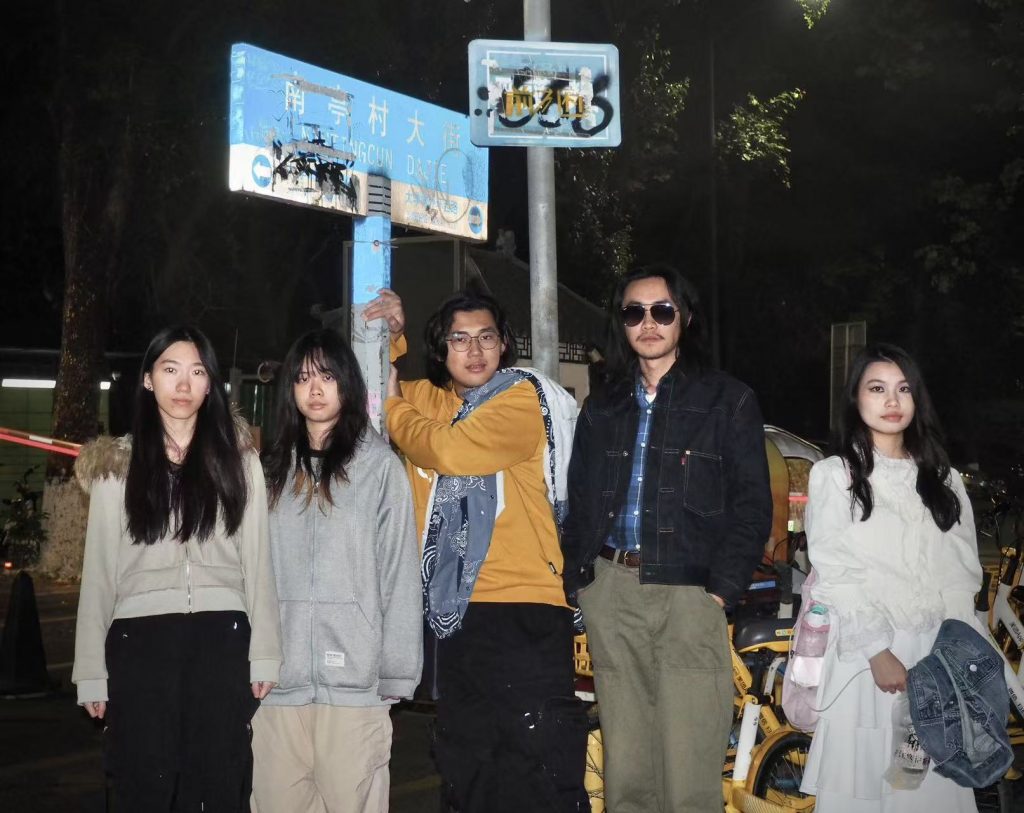
Art in the Cracks: A Performance of Memory and Indifference in Nanting Village
Nanting Village has long been a place of dual realities. To students and artists from the neighboring Guangzhou Academy of Fine Arts, it is a canvas of possibility—a space to live, work, and imagine. To many of its residents, however, it is simply home, a place of practical transactions and daily rhythms, where art rarely registers as more than a passing curiosity.
Through conversations with artists, teachers, and villagers, a clear but unspoken truth emerged: while artists often invest deep thought and emotional energy into the village, the relationship remains largely one-sided. Nanting, in many ways, responds with indifference. Art exists here not as a dialogue, but as a monologue—spoken passionately by creators, but often unheard by the community they inhabit.
It was from this tension that a recent performance work was born.
The Concept: Writing with the Land, Writing on the Land
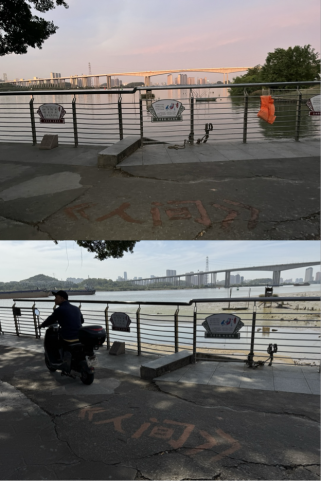
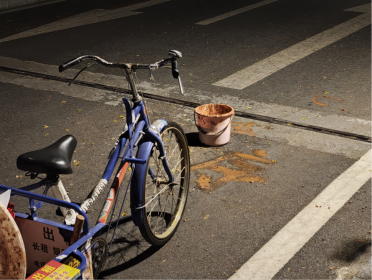
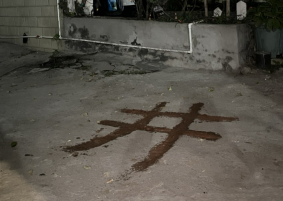
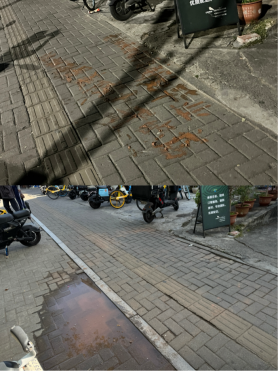
Titled informally as an extension of the “Village Poets” concept, the piece transformed Nanting itself into a living manuscript. The artists acted as brushes; the village streets became the scroll. But the ink itself carried deep symbolic weight: it was made from soil collected across the GAFA campus and water drawn from the university lake. This mixture—literal earth and water from the academy—became a metaphor for the essence of art, a concentrated “art in liquid form,” used to write a poem of hope directly onto the ground of the village.
The text itself was conceived in two layers:
- History: Fragments and stories of past artists and events that had taken place in Nanting—an ephemeral archive of what had been.
- Hope: Wishes and aspirations of the current generation, voiced as a quiet plea: “May Nanting have soil where art can grow.”
The Performance: Active Creation and Passive Participation
The artists wrote their texts at key locations—entrances, crossroads, spaces with artistic significance. The process was deliberate and visible, yet it solicited no direct engagement. The completion of the work relied entirely on the unconscious participation of the villagers.
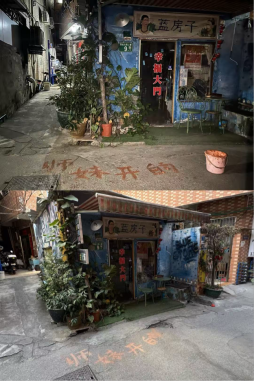
As people went about their days, they walked across the words. Feet smeared the still-damp mud, carrying traces of the text to other parts of the village—an unintended sowing of “artistic soil.” Some phrases were gradually trampled into the ground, absorbed into the very earth of Nanting. Others were swept away or washed clean by residents maintaining their environment.
No one stopped to read what was written.
The Meaning in the Fading
This erasure was not a failure of the piece—it was its essence.
- The footsteps scattering the mud became a gesture of unconscious dissemination, as if seeds of art were being carried to unknown ground.
- The fading of the words reflected the transient presence of art in a place governed by the immediate and the practical.
- The act of cleaning the streets revealed a preference for order over expression, a return to the normal that art often disrupts.
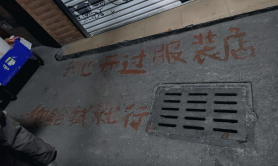
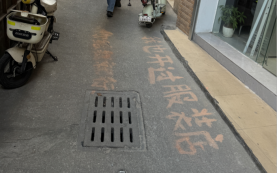
The performance captured the cyclical relationship between artist and village: creation, exposure, indifference, erasure. Yet, in that cycle, there was also a kind of integration. Art was not rejected; it was simply walked over, absorbed, and forgotten—becoming, in a way, part of the village’s subconscious.
Conclusion: Art That Is Felt, Not Seen
This performance did not seek to make art permanent in Nanting. Instead, it explored how art exists in a community that does not openly embrace it—how it can seep into the ground, be carried on the soles of shoes, and become part of a place’s unspoken history.
The final line of the piece, both written and embodied, might well be:
“A thousand artworks come and go, but Nanting remains as it is.”
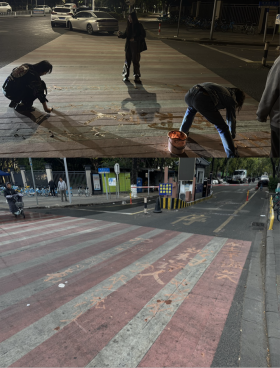
Yet, in the earth-and-water ink, in the silent writing and the unintentional spreading, there remains a fragile hope—that what is grounded in a place, even when unseen, may one day take root.
Leave a Reply