Nanting Village and the Art Academy: An Interview on Symbiosis and Creative Space
In the second part of our campus interview series, we sat down with Luo Peng, a thoughtful observer of the dynamics between Guangzhou Academy of Fine Arts (GAFA) and its neighboring Nanting Village. His reflections reveal a relationship that goes beyond geography—one built on symbiosis, transition, and the quiet shaping of artistic practice.
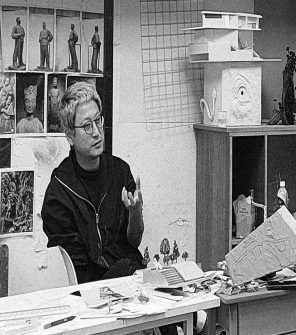
I. Nanting Village and the Academy: A Relationship of Interdependence
Nanting Village exists as what Luo describes as an “accompaniment” to the university town—a community deeply intertwined with the life and needs of GAFA.
- A Space of Mutual Nourishment
The village and the academy share a symbiotic relationship. Students bring vitality and commercial demand to the village, while Nanting offers a living environment and a space for real-world artistic practice. Without GAFA, the current ecosystem of Nanting would be difficult to sustain. - A Supplement to Institutional Practice
Compared to the structured campus environment, Nanting grows in an organic, almost “wild” manner. It provides students with raw, real-life material for observation and creation—helping to bridge the gap that often exists between academic art and lived reality.
II. Nanting’s Role in the Wider Social Fabric
The village occupies a unique position—not quite campus, not fully city.
- An “Intermediate Zone” Between Worlds
Nanting embodies social diversity through its mix of commerce, migrants, and everyday life, yet its complexity remains lower than that of the fully open society. This offers students a measure of protection as they navigate life beyond the campus gates. - A Buffer Before Entering Society
It serves as a semi-socialized space—a transitional environment where students can gradually accumulate life experience, negotiate rents, build relationships, and resolve conflicts, all within a relatively safe and familiar setting.
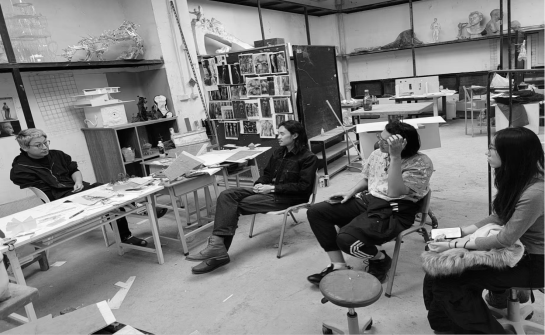
III. Art Development and the Village Ecosystem
Luo Peng also touched upon the broader role Nanting plays in shaping artistic development.
- Beyond the Ivory Tower
He emphasized that art education should not be confined to the academy. Real and marginalized spaces like Nanting often foster more authentic forms of artistic expression, free from the preset answers and protective bubbles of campus life. - Nanting as a “Container” of Tensions
The village accommodates a mix of abstract and mundane, local and migrant, poetic and practical. This coexistence of contrasting elements forms a unique cultural ecology—one that fuels creativity.
IV. How Nanting Influences Student Artistry
From Luo’s perspective, Nanting offers at least three key benefits to student creators:
- A Space for Real Experience
By breaking the “ivory tower,” Nanting allows students to observe life as it is—unfiltered and unstructured. Everyday elements like noise, smells, crowds, and even disorder become sources of inspiration. - Building an Artistic Community
Shared studios, collaborative projects, and common living experiences help form a natural creative community. The mix of residents and students from varied backgrounds also encourages cross-cultural perspectives in their work. - A Transitional Zone for Social Learning
Nanting works as a low-stakes social laboratory. Experiences like bargaining, renting, and navigating neighborly disputes prepare students for life beyond school. Public spaces like streets and shops also offer potential platforms for community-based art experiments.
In Conclusion: More Than a Village, a Vital Ecosystem
Nanting Village is not just a place to live—it’s a space where art students learn to merge life with practice, where the abstract meets the everyday, and where the transition from campus to society happens gently, meaningfully.
As Luo Peng’s observations suggest, its true value lies not in perfection, but in its layered, living reality—a reality that continues to shape a generation of artists in ways the classroom never could.
Leave a Reply