A Decade in Nanting: An Artist’s Life Between Creation and Drift
In the third part of our Nanting Village series, we speak with an artist who has stayed for nearly ten years—though he humbly describes himself as “not a real artist, just someone who persists in creating.” His story offers a quiet, grounded perspective on what it means to live and make art in a place often defined by transience.
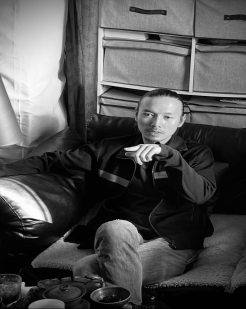
I. The Artist’s Profile: A Life of Low Costs and High Freedom
Why stay in Nanting for so long? For this artist, the reasons are both practical and personal:
- Low cost of living makes it possible to sustain a creative practice without a formal job.
- Freedom to work on freelance projects and maintain a self-directed routine.
- A small but adequate space—enough to create, enough to live.
His daily life is simple, with minimal interaction beyond transactional exchanges—paying rent, buying groceries. He remains largely detached from the local community, yet deeply embedded in its physical and social fabric.
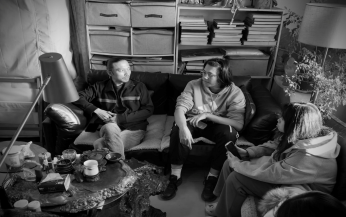
II. Creative Practice: Where Life Meets Art
Working across photography, video, installation, and painting in the past, he has focused in recent years mainly on lens-based media.
- Inspiration from the Everyday
His materials often come from what’s easily accessible around him. He emphasizes the value of “what’s at hand,” turning ordinary scenes into artistic reflections. - Notable Works
- River Series (2019–present): An ongoing documentary-style project capturing the nearby river, exploring change and continuity through image and video.
- Fairyland in the Human World: A video work shot near Nanxun Dock, weaving together scenes of ferries and passengers to blur the line between reality and an imagined, idealized world.
- Two Modes of Creation
Sometimes, a chance encounter with a scene leads to recording; other times, he begins with a theme and then gathers material. Both approaches coexist in his practice, allowing intuition and intention to guide his process.
III. Nanting’s Changing Artistic Ecology
Through his eyes, we see how the village has shifted as a creative base.
- The Rise and Fall of Studios
In earlier years, the second floors along the commercial street housed many studios—spacious and well-suited for work. But most students treated Nanting as a temporary stop, leaving within a year or two after graduation. Very few have stayed as long as he has. - Limitations of Space
Current spaces are generally too small for large-scale or installation works. This has driven many artists to move to areas like Xiaozhou Village, where more generous studios are available. - Relationship with Locals
Villagers don’t treat artists differently from anyone else. Interaction remains largely transactional, centered on rent and daily purchases. Many shops are run by outsiders, not locals, reinforcing a sense of parallel coexistence rather than integration.
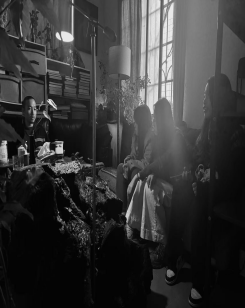
IV. A Candid View on Nanting’s Creative Climate
When asked whether he hopes Nanting might develop a stronger artistic atmosphere, his response is tellingly detached:
“That’s someone else’s business.”
He acknowledges that people experience Nanting differently—some love it, some don’t. Over the years, he’s seen GAFA graduates open clothing stores, trendy boutiques, and small shops, though most have moved away due to redevelopment.
What remains, in his view, is a kind of stasis—a “long-solidified” ecosystem of artists, villagers, and demographic patterns that neither resists nor encourages change.
Closing Reflection: Persistence in a Place of Passage
Nanting Village, for this artist, is neither a romantic artistic utopia nor a struggling community—it is simply a place that allows him to keep making work, on his own terms. In a neighborhood increasingly defined by turnover and transition, his quiet, decade-long presence is a form of testimony:
that some forms of art grow not in bursts of inspiration, but in the slow, sustained rhythm of a life built around creating.
Leave a Reply