Where Art Meets the Ground: A Performance in Nanting Village
In Nanting Village, a place long intertwined with the life of the Guangzhou Academy of Fine Arts, a quiet but profound disconnect persists. Through conversations with artists, teachers, and villagers, a recurring theme emerges: while artists often pour thought and emotion into this community, the village itself remains largely indifferent. Art is not a language shared by all—for many residents, interaction stays at the level of material exchange, with little space for creative dialogue.
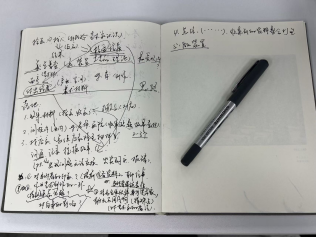
It is this gap that inspired a recent artistic intervention—one that sought not to force understanding, but to gently weave art into the fabric of everyday life.
The Concept: An Ephemeral Dialogue
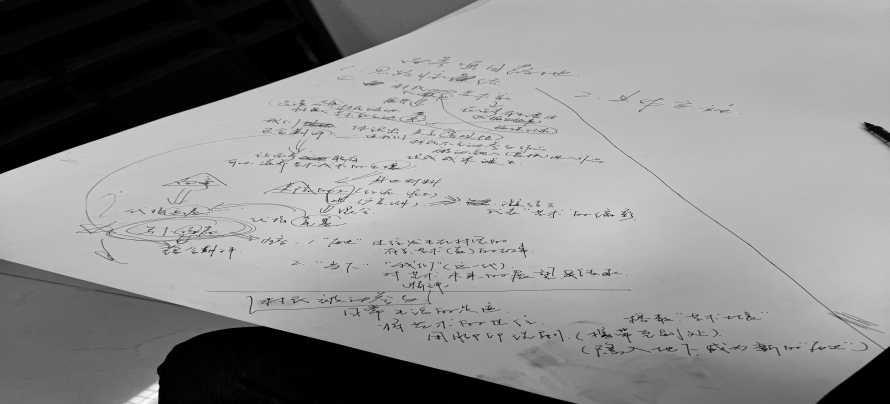
The project took shape as a performance piece, rooted in the idea of Nanting as both canvas and companion. The artists positioned themselves as active creators, while the villagers became passive participants—their daily movements unintentionally completing the work.
Using soil from the GAFA campus and water from the university lake, the team created a symbolic “ink.” This mixture—literally made of the academy’s earth and water—became a medium to write directly onto the streets of the village. The ground became a scroll; the artists, the brushes.
Two Layers of Meaning: History and Hope
The writings consisted of two parts:
- History: Stories and moments tied to artists who have lived and worked in Nanting over the years.
- Hope: Aspirations of the current generation—a wish for the village to become soil where art can grow.
What followed was a quiet, powerful transformation. As villagers walked through the streets, their footsteps slowly blurred the words. The still-wet mud was carried away on soles, scattered across other paths—an unintentional sowing of “artistic soil.” In other places, the words were gradually trodden into the ground, absorbed into the very earth of Nanting, becoming part of its unseen history.
A Metaphor in Motion
No one stopped to read what was written. The act was not about being seen or understood—it was about presence and process. The piece reflected the reality of the artist-villager relationship: art passes through, often unnoticed, yet leaves something behind. It fades, spreads, or sinks in, but never truly disappears.
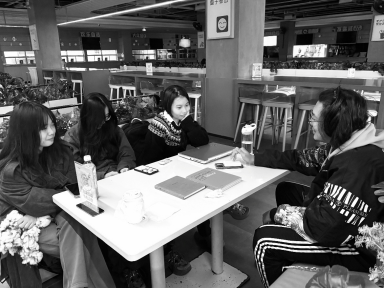
“A thousand artworks may come and go, but Nanting remains as it is,” one participant reflected. Yet in that constancy lies a kind of quiet possibility—the possibility that art, even when ignored, can still seep into the ground of a place, and in time, perhaps, take root.
Not an Ending, a Seeding
This performance did not seek to resolve the disconnect between artists and villagers. Instead, it offered a poetic form of acknowledgment—and a gesture of hope. By using the very earth and water that bind the academy to the village, the artists embedded their wishes into the landscape.
In the end, the piece asked a subtle question:
Can a place be changed by what it does not notice?
In Nanting, that question now lingers—written on the ground, carried on shoes, and waiting, patiently, in the soil.
Leave a Reply